The drone industry moves fast, but every year there are a handful of events that genuinely shape where the ecosystem is heading. The 2025 ArduPilot Developers Conference in North Yorkshire, UK was one of those moments.
Hosted by 3DXR and organized alongside KH Unmanned, the conference brought together developers, integrators, manufacturers, and operators from across the global unmanned systems community. Industry leaders including CubePilot, CUAV, Holybro, and independent developers gathered to share technical advancements, troubleshoot challenges, and showcase the next generation of autonomous systems.
For our team, the event was more than just a conference. It was an opportunity to connect directly with the people actively building and shaping the future of ArduPilot.
“As they say: ‘Birds of a feather flock together.’ In this case, drones of a propeller swarm together.”
Unlike traditional trade shows focused heavily on sales and marketing, the ArduPilot Conference is deeply technical by nature. Conversations ranged from firmware development and flight stack optimization to hardware integration, autonomy workflows, and advanced BVLOS operations.
One of the most valuable aspects of the event was the ability to sit down directly with engineers and core developers behind some of the most widely used technologies in the industry. Discussions with teams from CubePilot, KH Unmanned, and 3DXR opened the door to collaborative troubleshooting, workflow improvements, and insight into future platform capabilities.
Our engineers were also able to discuss several real-world bugs and development challenges directly with core ArduPilot contributors. These conversations led to immediate improvements in workflow and introduced new tools and development strategies that have already begun improving internal processes.
In many ways, that collaborative environment is what makes the ArduPilot ecosystem unique. The open-source model allows operators, developers, and manufacturers to work together in ways that simply are not possible within closed proprietary systems.
The conference also featured live demonstrations of advanced UAV and fixed-wing platforms, highlighting just how rapidly autonomous systems continue to evolve.
Demonstrations included:
For engineers and operators alike, seeing these systems fly in person often sparks entirely new ideas for future applications and product development.
The event reinforced how quickly the broader unmanned systems industry is maturing, particularly in areas like:
The conference also reflected ArduPilot’s growing role within the worldwide UAV ecosystem.
In 2025, ArduPilot continued expanding its influence across commercial, industrial, educational, and government sectors. The release of Copter 4.6.3 marked another major milestone for multicopter and helicopter stability, while the platform continued gaining traction globally for its flexibility, transparency, and developer-driven innovation.
ArduPilot was also prominently featured at the 2025 World Drone Congress in Shenzhen, China, further reinforcing its adoption across commercial VTOL and educational UAV systems.
What continues to separate ArduPilot from many competing solutions is its adaptability. Whether supporting research projects, industrial inspection aircraft, custom heavy-lift platforms, or advanced autonomous workflows, the platform remains one of the most flexible and widely supported open-source autopilot ecosystems available today.
Beyond the technical knowledge and product discussions, the conference highlighted the strength of the ArduPilot community itself.
Open-source development thrives because of collaboration, and events like this create a rare opportunity for engineers, developers, pilots, and manufacturers to share knowledge face-to-face. The ideas exchanged at these conferences often shape the tools, firmware improvements, and operational capabilities that eventually become standard across the industry.
Our team left the conference energized by both the technical discussions and the broader direction of the unmanned systems industry. The connections made and lessons learned are already influencing current workflows and future development planning.
And perhaps most excitingly, there’s hope that next year’s conference won’t just involve attending discussions, but contributing directly to them through a presentation of our own.
The future of open-source autonomy continues to accelerate, and the ArduPilot community remains right at the center of it.
Aero Systems West is at the forefront of today’s dynamic drone industry. We specialize in developing custom unmanned aerial systems (UAS) that integrate cutting-edge software, advanced sensor fusion, and modular payload solutions. With deep expertise rooted in aerospace and defense, our team delivers innovative, adaptable, and mission-critical solutions designed to meet the evolving demands of commercial, public safety, and defense applications. Discover how our state-of-the-art technologies are reshaping the future of unmanned flight by visiting our website or contacting us directly.
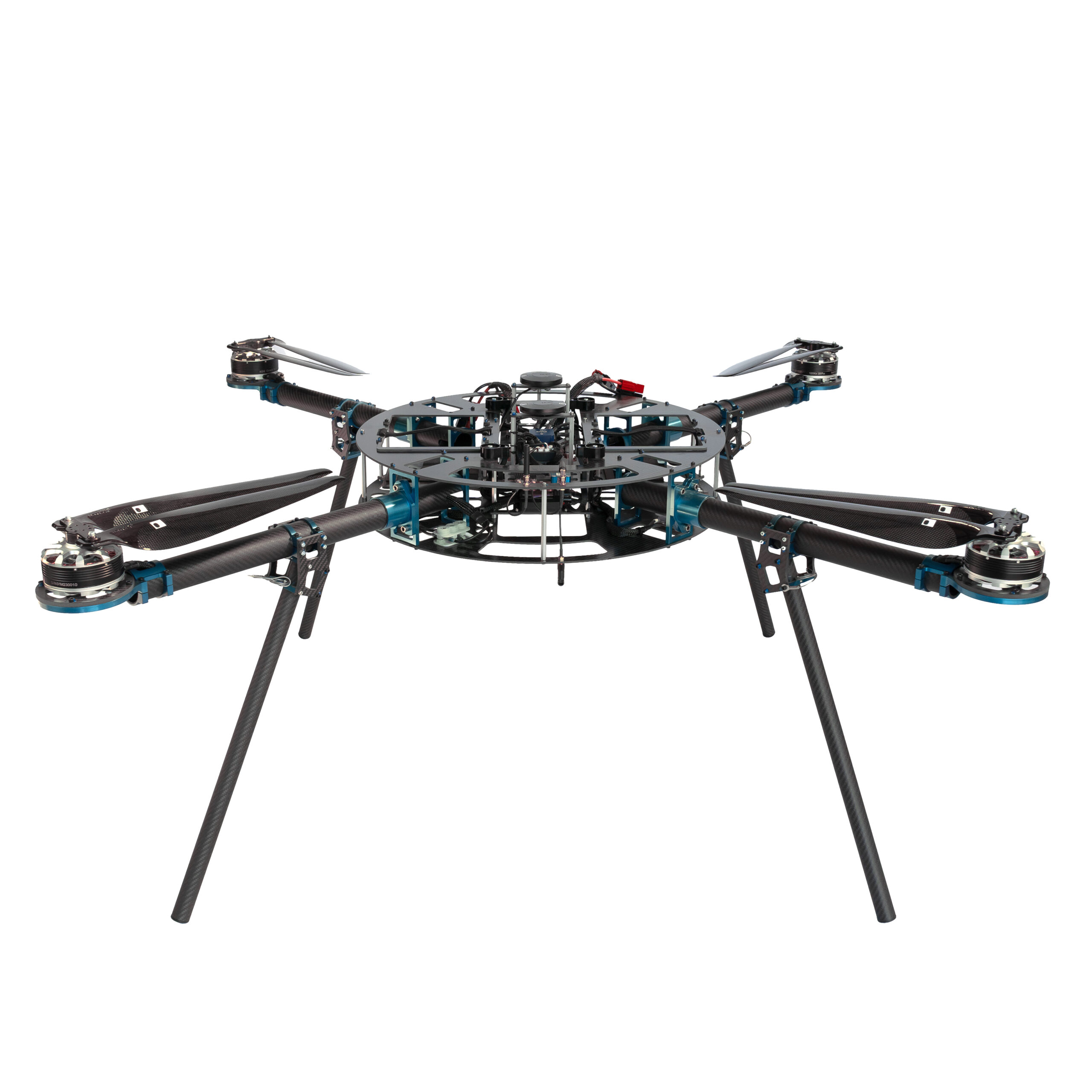
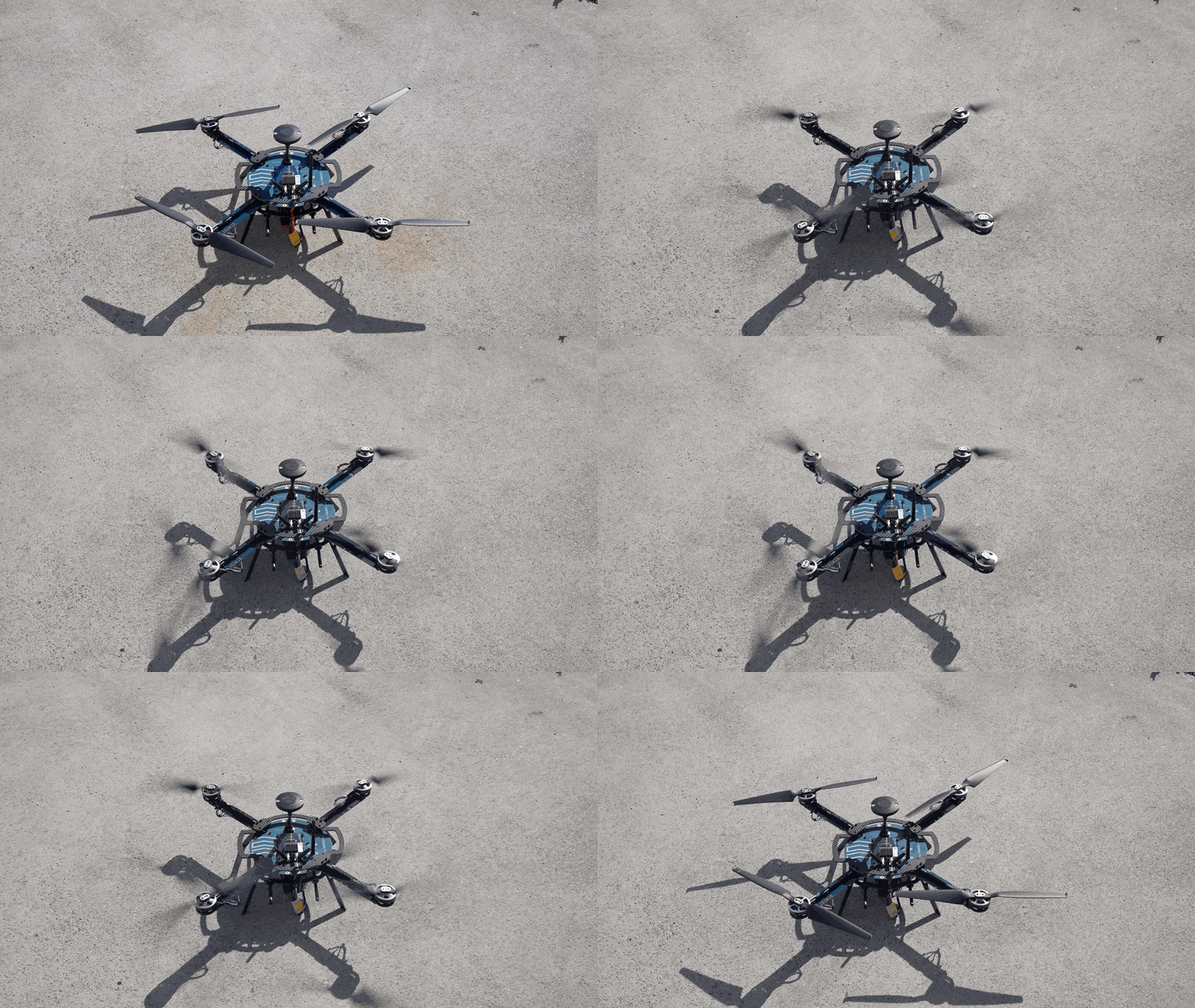
From precision sensors to stealth startup prototypes, ASW’s heavy-lift platforms are engineered to integrate almost any payload—whether it’s off-the-shelf, in development, or one-of-a-kind. Common payloads can be mounted using our modular tray system. For specialized integrations, our engineering team can design a custom bolt-on interface tailored to your mission needs.
We don’t limit innovation—if it fits the platform and meets FAA guidelines, we’ll help you lift it.
Common Payload Types We Support:
Imaging & Visual Systems
RGB and DSLR cameras (Sony, Canon, Phase One)
EO/IR (Electro-Optical/Infrared) systems (CACI, Gremsy, Trillium etc.)
Thermal imaging cameras (FLIR, Workswell etc.)
Multispectral & hyperspectral sensors
360° panoramic and cinematic camera rigs
Your custom optical payloads, stealth systems, and more
Remote Sensing & Surveying
LiDAR systems (e.g., RIEGL, Velodyne, Livox)
Photogrammetry payloads
Ground Penetrating Radar (GPR)
Magnetometers and geophysical sensors
Atmospheric gas or air quality sensors
Prototype sensors and undisclosed research payloads welcome
Agricultural & Environmental
NDVI/multispectral crop health sensors
Spray systems for precision agriculture
Seed dispersal mechanisms
Environmental sampling probes
Wildlife observation & habitat mapping gear
Emerging environmental payloads and more
Delivery & Deployment
Package delivery containers
Medical supply drop kits
Controlled release mechanisms (servo-triggered)
Payload baskets and sling systems
Winch-and-drop delivery modules
Beta systems, test hardware, and field prototypes supported
Specialized & Tactical (Non-Weaponized)
Counter-UAS detection systems
RF jammers and signal intelligence sensors
Search & rescue (SAR) beacons and loudspeakers
High-powered spotlights or strobe arrays
Emergency communication repeaters
Custom Payload Support
Have something different in mind?
We offer:
CAD-based payload fitment analysis
Custom trays, brackets, and dampening systems
Regulated/unregulated power interface design
Custom wiring, testing, and validation
Integration support for stealth programs and field tests
ASW offers training courses for all of the systems we sell. In-depth sessions are available for novice operators and those without existing certifications, while short courses are available for more experienced pilots simply requiring familiarity training on their new vehicle. Additionally, currency days with factory certified trainers are available for those who need to log flight time for operational requirements.
The team at ASW has extensive experience providing complex unmanned systems to civil and government customers. We can provide expert solutions to meet your requirements. Our services include:
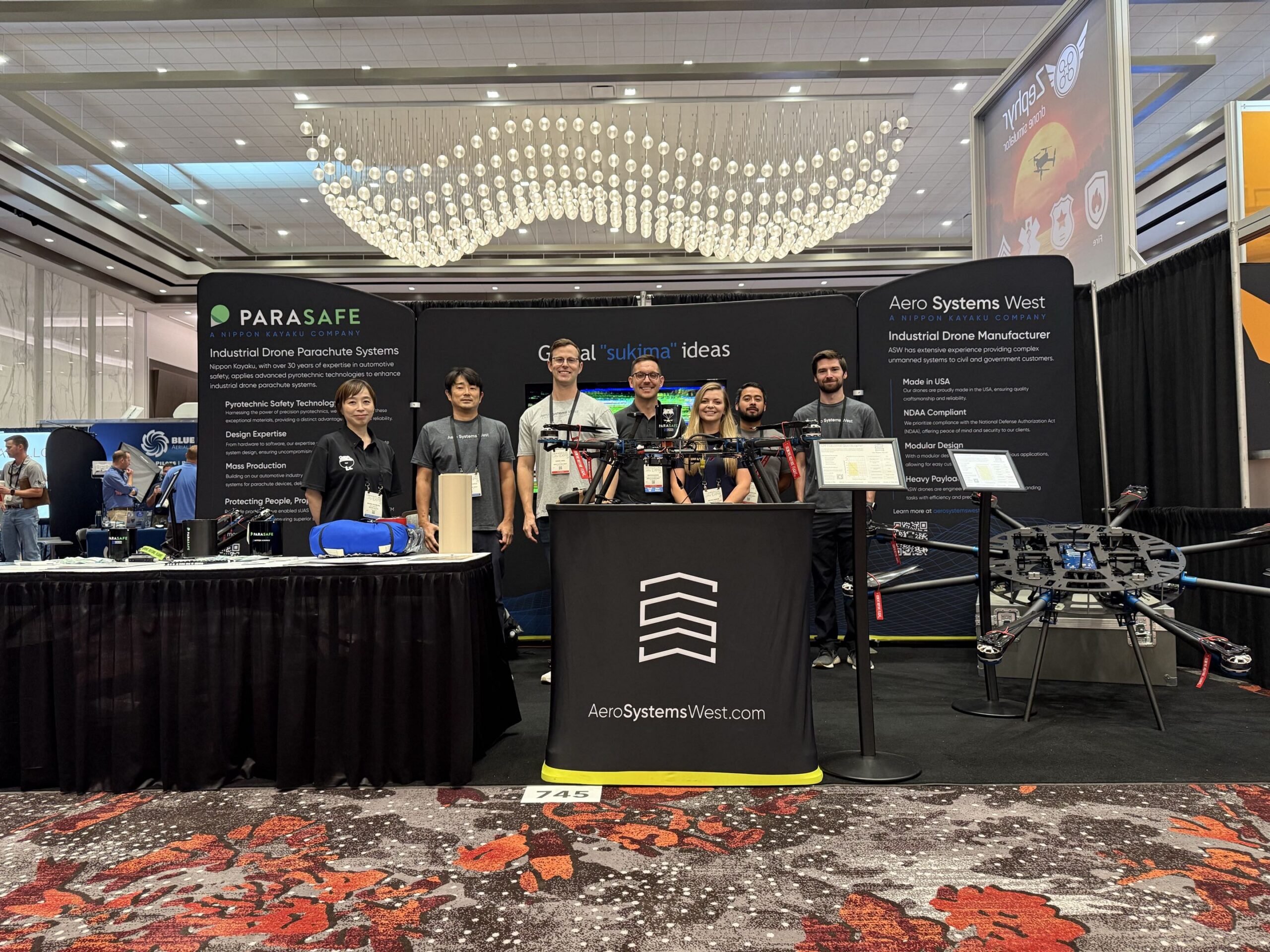
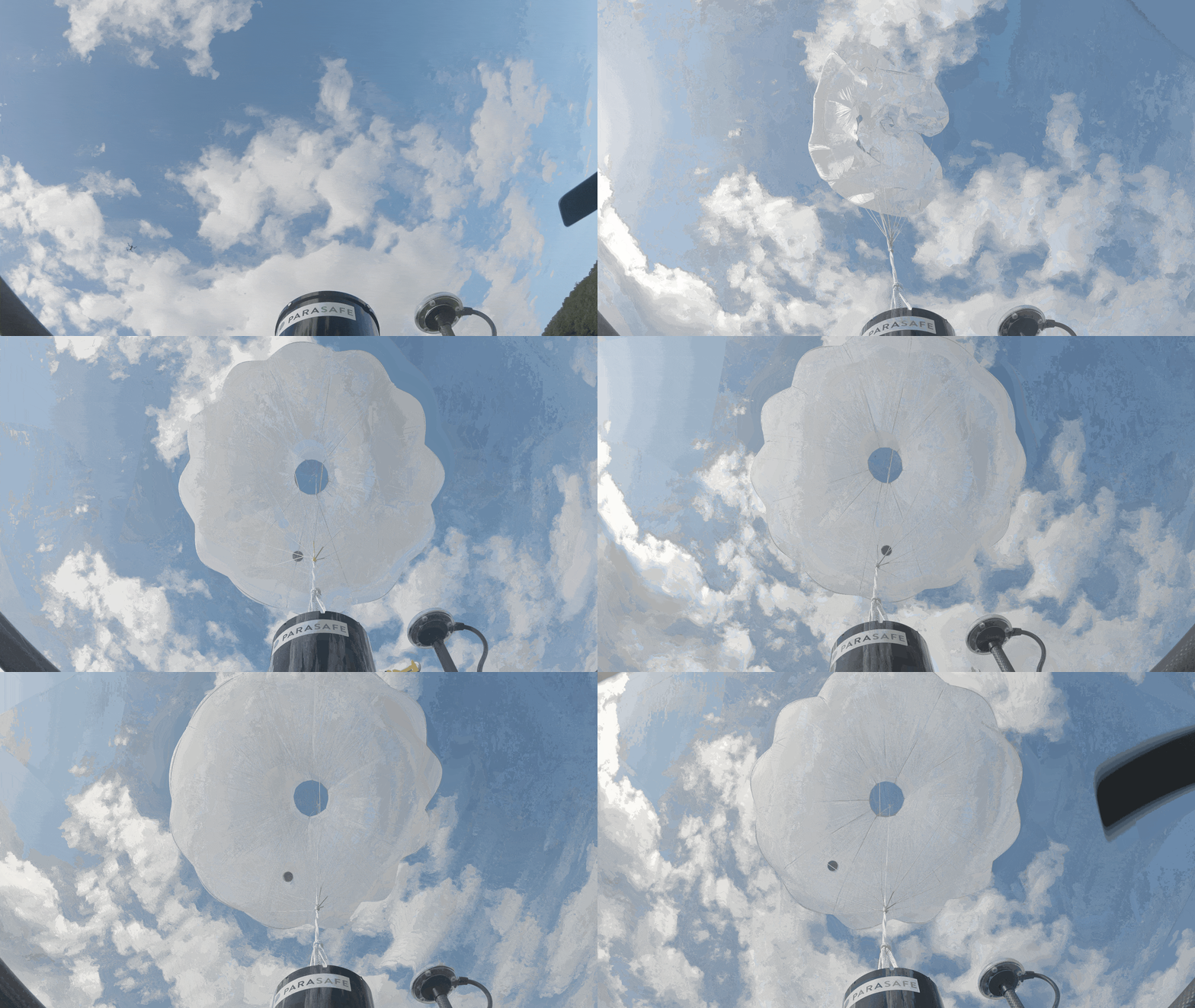
Yes, through our sister company, PARASAFE
In July of 2021, Aero Systems West, Inc. was acquired by Nippon Kayaku Company. This acquisition further advanced our commitment to enabling UAS flight safety. Nippon Kayaku Company has contributed to UAS safety through the development of high reliability fast deploying parachute safety devices. Through this acquisition, Nippon Kayaku Company and ASW have unified their visions and goals to deliver “Safety as a Standard.”
Parasafe is now available directly through ASW – Safety As A Standard: Introducing the PARASAFE® CA12-01 25kg Parachute Safety System for Drones!
We provide hassle-free regular maintenance by aviation experts to keep your drone working well for years
Simply ship your drone back to ASW and we will check every nut and bolt and return the drone is like new condition.
With our ONE YEAR Limited Warranty, our experienced customer service team will repair any unforeseen issues.
|
Uploaded
Failed
|
 |
Ready to explore our exceptional products and services? We’re thrilled to connect with you! Just fill out the quick form below, and our dedicated team will promptly reach out to assist you with any questions or inquiries you may have. Let’s embark on an exciting journey together!
We’ll deliver news about new products, sales and exclusive promos. Pretty cool right?